
vs PPC in digital marketing is a hot topic that sparks a lot of debate among marketers. Both approaches have their merits and can significantly impact a business’s online visibility, but understanding their differences can be crucial. In this discussion, we’ll delve into what sets these two strategies apart, their respective advantages, and how they can work together to create a formidable digital marketing strategy.
This exploration will cover the fundamental differences between and PPC, their cost-effectiveness over time, and the timeframes required to see results. Additionally, we’ll touch on the benefits and limitations of each method and how they can complement other marketing strategies to maximize your digital footprint.
Comparison of and PPC
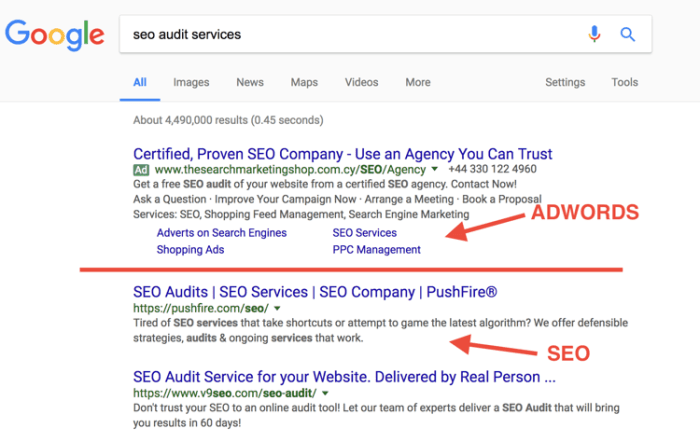
Digital marketing encompasses various strategies, with Search Engine Optimization () and Pay-Per-Click (PPC) advertising being two of the most commonly utilized. While both aim to increase website visibility and attract visitors, they operate under different principles and mechanics. Understanding their fundamental differences is crucial for businesses looking to optimize their digital marketing efforts.
Fundamental Differences Between and PPC
focuses on organically improving a website’s ranking in search engine results through various optimization techniques, including research, content creation, and link building. In contrast, PPC involves paying for advertisements that appear on search engine results pages (SERPs) or social media platforms. Advertisers bid on s, and their ads are displayed based on the bid and quality score. The key differentiators can be summarized as follows:
- Nature of Results: generates organic traffic over time, while PPC provides immediate visibility through paid ads.
- Ownership: With , the results are owned long-term as the website gains authority; PPC results stop as soon as the ad budget is exhausted.
- Traffic Sustainability: can yield lasting traffic once a good ranking is achieved, while PPC relies on continuous funding for traffic.
Cost-Effectiveness Over Time
When evaluating cost-effectiveness, it’s essential to consider both short-term and long-term expenses associated with and PPC. Initial investments in PPC can lead to quick returns but may become expensive if not managed properly. Conversely, requires an upfront investment in time and possibly resources, but it can lead to sustainable traffic without ongoing costs.
- Costs: Typical expenses may include hiring specialists or agencies, content creation, and technical improvements. However, once established, these costs diminish over time.
- PPC Costs: Costs are ongoing and can escalate based on competition and selection. Advertisers may need to continually adjust bids, and the budget can fluctuate.
- ROI Comparison: While PPC can generate immediate revenue, the long-term ROI of may surpass PPC as organic traffic builds and marketing costs decrease.
Time Required to See Results
The time it takes to achieve results with and PPC varies significantly. PPC campaigns can start generating traffic immediately upon activation, often within hours or days, depending on the ad budget and targeting strategies. In contrast, is a longer-term strategy that requires consistency and patience.
- PPC Results Timeline: Advertisers can expect to see clicks and conversions almost instantly after launching a campaign, allowing for quick testing of ad performance.
- Results Timeline: efforts can take several months to start showing significant results. A typical timeframe ranges from 3 to 6 months before noticeable improvements in rankings and traffic are seen.
- Impact of Competition: In highly competitive niches, might take longer to yield results due to the effort required to outrank established players.
Benefits and Limitations
In the digital marketing arena, understanding the benefits and limitations of both and PPC is essential for creating a well-rounded strategy. Each has its unique advantages and potential drawbacks, which can significantly influence traffic generation and overall marketing effectiveness.
Advantages of
offers several compelling benefits that can enhance a digital marketing strategy. One of the foremost advantages is its potential for long-term success. Once a website achieves a good ranking on search engines, it can consistently attract organic traffic without ongoing costs for every click. This leads to a higher return on investment (ROI) over time. Key benefits include:
- Cost-effectiveness: Organic traffic from does not require ongoing payment per click, making it more affordable in the long run.
- Credibility and Trust: Users often trust organic search results more than paid ads, leading to higher credibility.
- Enhanced User Experience: practices like improving site speed and mobile-friendliness contribute to a better overall user experience.
- Increased Visibility: Higher rankings on search engines lead to increased visibility and brand awareness.
Drawbacks of Relying Solely on PPC
While PPC can deliver quick results in traffic generation, relying solely on it has certain limitations. One major drawback is the cost associated with ongoing ad spend. Once a campaign ends, all traffic stops, and businesses must continuously invest to maintain visibility. Additionally, users may perceive paid ads as less trustworthy than organic results, leading to lower engagement rates. Limitations include:
- High Costs: Consistent spending on PPC can strain budgets, especially in competitive industries.
- Ad Fatigue: Users often become desensitized to ads, leading to diminishing returns on engagement over time.
- Short-term Gains: PPC only generates traffic while the ads are running, making it less sustainable for long-term growth.
- Complexity in Management: Effective PPC campaigns require constant monitoring, adjustments, and optimization to be successful.
Combining and PPC
Integrating both and PPC can yield significant benefits for a digital marketing strategy. Combining the two approaches allows businesses to maximize their reach and effectiveness. By leveraging the strengths of both methods, companies can create a balanced approach that enhances performance. Scenarios where this combination is particularly beneficial include:
- Research: PPC can help identify high-converting s that can be targeted through efforts.
- Brand Awareness: Utilizing both strategies can increase visibility across multiple platforms and channels.
- Testing and Optimization: PPC campaigns can provide valuable insights into audience behavior, which can inform strategies.
- Complementary Strategies: Using PPC to support efforts during the initial phases can generate immediate traffic while waiting for organic results.
Integration with Other Marketing Strategies
In today’s digital landscape, blending different marketing strategies can yield remarkable results. (Search Engine Optimization) and PPC (Pay-Per-Click) advertising are two powerful tools that, when combined with other methods like email marketing and banner advertising, can create a comprehensive marketing ecosystem. This synergy not only boosts visibility but also enhances user engagement and conversion rates.The integration of and PPC with other digital marketing strategies allows businesses to leverage each channel’s strengths.
For instance, while focuses on organically increasing website visibility, PPC can provide immediate traffic through paid ads. By aligning these strategies with email marketing, businesses can nurture leads and maintain customer relationships, while banner ads can reinforce brand messaging across different platforms.
Successful Campaign Examples
Numerous brands have successfully integrated , PPC, and content marketing strategies to maximize their reach and effectiveness. For example, a prominent online retailer utilized a multi-channel approach during a seasonal sale. They optimized their website for relevant s (), ran targeted Google Ads (PPC), and sent out personalized email campaigns to their subscribers. This cohesive strategy resulted in a 40% increase in sales compared to the previous year.Another case is a tech company that combined and PPC with content marketing.
By creating informative blog posts optimized for search engines and promoting these posts through paid ads, they not only increased traffic but also established authority in their niche. This approach led to a 30% rise in lead generation, demonstrating the power of a well-rounded marketing strategy.
Incorporating and PPC into Digital Marketing Strategy
A structured plan for incorporating and PPC into an overall digital marketing strategy involves several key components. Each element plays a vital role in ensuring that all channels work cohesively toward common goals. Below is a framework to consider:
1. Domain Name Selection
Choose a domain name that reflects your brand and is rich in relevant s. This can enhance both and PPC campaigns, making it easier for users to find and remember your site.
2. Content Creation
Develop high-quality, engaging content that serves both and PPC purposes. Blog posts, infographics, and videos can be optimized for search engines and promoted through PPC ads, driving traffic and engagement.
3. Research
Conduct thorough research to identify terms that resonate with your target audience. Use these s in your strategy and align them with your PPC ad campaigns for consistency.
4. Email Marketing Integration
Use insights from and PPC campaigns to create targeted email marketing campaigns. Share content that has performed well and use data to segment your audience for personalized messaging.
5. Performance Tracking
Establish metrics to measure the effectiveness of both and PPC efforts. Analyzing data regularly allows for quick adjustments to enhance overall performance.
6. Cross-Promotion
Promote PPC ads on social media and within email newsletters to increase visibility. Similarly, utilize -optimized content in these channels to drive organic and paid traffic consistently.Implementing this structured approach helps to ensure a seamless integration of and PPC within your digital marketing strategy, leading to greater overall effectiveness and ROI.
Concluding Remarks
In conclusion, navigating the world of vs PPC in digital marketing requires a balanced approach. Both strategies have unique strengths that, when harnessed together, can elevate your brand’s online presence. By understanding when to use , when to invest in PPC, and how to integrate them with other marketing efforts, you’re well on your way to crafting a comprehensive digital marketing strategy that drives results.
Quick FAQs
What is the main difference between and PPC?
focuses on organic search results while PPC involves paid advertisements to gain visibility.
How quickly can I see results from ?
typically takes several months to show significant results, while PPC can yield immediate traffic.
Is or PPC more cost-effective?
can be more cost-effective in the long run, but PPC can provide quicker returns on investment for immediate needs.
Can I use and PPC together?
Yes, using both can complement each other, allowing for a broader reach and a more comprehensive marketing approach.
Which is better for small businesses, or PPC?
It depends on the business goals; PPC can provide immediate traffic, while builds long-term organic presence.


