
GDPR and email marketing compliance is a crucial topic for businesses navigating the complexities of digital marketing in today’s privacy-centric landscape. Understanding the core principles of GDPR is essential for any marketer aiming to maintain trust and legality in their email communications.
From the requirement of explicit consent to the implications for data protection and user privacy, mastering GDPR guidelines sets the foundation for effective and responsible email marketing strategies. Businesses must ensure that their practices not only comply with these regulations but also foster positive relationships with their subscribers.
Understanding GDPR in the Context of Email Marketing
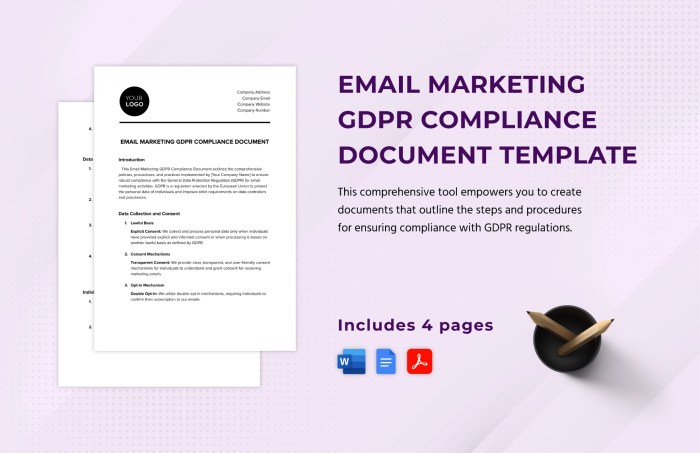
The General Data Protection Regulation (GDPR) has significantly impacted how businesses handle personal data, especially in email marketing. Understanding its principles is crucial for marketers to ensure compliance and build trust with their audience. This regulation, which came into effect in May 2018, aims to protect the privacy and personal data of EU citizens and residents, affecting any organization that processes such data, regardless of its location.The GDPR is built on several key principles that guide data processing activities.
These principles include lawfulness, fairness, transparency, purpose limitation, data minimization, accuracy, storage limitation, integrity, confidentiality, and accountability. Each of these principles has implications for email marketing practices, emphasizing the need for marketers to handle personal data responsibly and ethically. For instance, the principle of transparency requires marketers to provide clear information about how subscribers’ data will be used, which directly influences how consent is obtained and managed.
Consent Requirements under GDPR for Email Subscribers
Obtaining consent is a cornerstone of the GDPR, particularly in the context of email marketing. Consent must be freely given, specific, informed, and unambiguous. This means that marketers cannot rely on pre-checked boxes or implied consent; instead, they must ensure that subscribers actively opt-in to receive communications. To illustrate the consent requirements, consider the following critical aspects:
- The opt-in process must be clear and straightforward, allowing users to understand what they are consenting to. For example, a subscription form should explicitly state the types of emails the subscriber will receive.
- Consent must be documented and stored securely, as marketers must be able to demonstrate compliance if requested by authorities. This could involve keeping records of when and how consent was obtained.
- Subscribers should have the ability to withdraw consent at any time easily. Marketers must include clear instructions on how to unsubscribe in every email communication.
Implications of GDPR on Data Protection and User Privacy for Email Marketers
The implications of GDPR are profound for email marketers, particularly concerning data protection and user privacy. Marketers must adopt a robust approach to data governance and security. Non-compliance can result in significant penalties, including fines of up to 4% of annual global turnover or €20 million, whichever is higher.To ensure compliance with GDPR, marketers should focus on the following:
- Data minimization is essential, meaning marketers should only collect and process data that is necessary for their specific purposes. This reduces the risk of data breaches and demonstrates a commitment to user privacy.
- Regular audits of data processing activities are crucial. Marketers should assess their practices, ensuring that they align with GDPR requirements and protecting user data effectively.
- Training staff on GDPR compliance and data protection best practices fosters a culture of privacy within the organization, essential for maintaining compliance and safeguarding customer trust.
“GDPR is not just about compliance; it’s about building a trustworthy relationship with your audience through transparency and respect for their privacy.”
Email Marketing Compliance Strategies
To successfully navigate the complexities of GDPR while executing email marketing campaigns, it’s essential to implement effective compliance strategies. These strategies not only help in adhering to legal requirements but also build trust with your audience, enhancing engagement and customer loyalty.
Actionable Steps for Ensuring Email Marketing Compliance
Adhering to GDPR mandates specific actions that email marketers must follow. By implementing these measures, you can ensure that your email campaigns respect user privacy and comply with legal standards:
- Obtain Explicit Consent: Always secure clear and affirmative consent from users before sending marketing emails. This can be done through opt-in forms that clearly Artikel what users are consenting to.
- Offer Easy Opt-Out Options: Every marketing email should include a straightforward mechanism for users to withdraw their consent anytime, ensuring they can easily unsubscribe.
- Limit Data Collection: Only collect personal data that is necessary for your marketing objectives. Avoid excess data collection that may complicate compliance.
- Use Data Protection by Design: Incorporate data protection measures into your email marketing processes from the outset, ensuring compliance is integral to your campaign strategy.
- Train Your Team: Ensure that everyone involved in the email marketing process understands GDPR requirements and the importance of compliance.
Creating Clear and Concise Privacy Policies
A well-crafted privacy policy is crucial for informing users about how their data will be used in email campaigns. Here are essential components to consider when drafting privacy policies:
- Transparency: Clearly state what personal data is collected, how it will be used, and who will have access to it.
- Data Retention: Specify how long personal data will be retained and the rationale for this duration.
- User Rights: Inform users of their rights regarding their personal data, including the right to access, rectify, or delete their information.
- Contact Information: Provide details on how users can contact you with questions or concerns about their data privacy.
- Update Notifications: Commit to informing users whenever there are updates to the privacy policy, ensuring ongoing transparency.
Keeping Accurate Records of User Consent
Maintaining accurate records of user consent is paramount in demonstrating compliance with GDPR. Here are methods to ensure your records are robust and reliable:
- Document Consent Details: Keep a record of when and how consent was obtained, including the specific wording used in the consent request and any corresponding responses from users.
- Manage Consent Preferences: Implement a system to allow users to manage their consent preferences easily, with logs to track changes and updates over time.
- Regular Audits: Perform periodic audits of your consent records to ensure they are complete and up to date, identifying any gaps or areas needing improvement.
- Utilize Consent Management Tools: Leverage technology solutions specializing in consent management to streamline the process, ensuring compliance with GDPR requirements.
- Backup Records: Regularly back up your consent records to prevent data loss and ensure you can access information when needed.
Broader Implications of GDPR Beyond Email Marketing
The General Data Protection Regulation (GDPR) has far-reaching consequences that extend well beyond email marketing. Understanding its implications in various online marketing channels is crucial for businesses aiming to maintain compliance and foster consumer trust. The regulation sets stringent rules for how personal data can be collected, processed, and stored, influencing numerous aspects of digital marketing.
Relevance of GDPR to Other Online Marketing Channels
GDPR’s influence can be felt across various online marketing platforms, including banner advertising and blogging. Advertisers must navigate these regulations carefully to avoid hefty fines while still effectively reaching their target audience. In the realm of banner advertising, GDPR necessitates obtaining explicit consent from users before employing cookies or other tracking technologies to collect data. Advertisers must ensure that their privacy policies are transparent and easily accessible, detailing what data is collected and how it will be used.
Any failure to comply could result in significant penalties.When it comes to blogging, content creators must consider how they collect and manage reader data. GDPR requires that they disclose how personal information is handled, especially if they engage in affiliate marketing or use analytics tools that track user behavior. A clear privacy policy is essential, and blog owners should provide readers with an easy opt-out method if they wish to withdraw consent.
GDPR and Customer Data in E-commerce Settings
In e-commerce, GDPR has transformed how businesses manage customer data. The regulation mandates that e-commerce platforms must have robust systems in place to protect personal information from unauthorized access and breaches. Key implications for e-commerce include:
- Data Minimization: Only essential customer data should be collected for transaction purposes, reducing the risk of exposure.
- Right to Access: Customers can request access to their data and demand corrections or deletions, requiring e-commerce businesses to have procedures in place for compliance.
- Data Breach Notification: In the event of a data breach, businesses must notify affected customers and the relevant authorities within 72 hours.
These measures not only enhance consumer trust but also help businesses avoid legal repercussions associated with non-compliance.
GDPR Compared to Other Digital Marketing Regulations
GDPR is not the only regulation impacting digital marketing; it often gets compared to the California Consumer Privacy Act (CCPA). While both regulations aim to protect consumer privacy, there are some distinctions worth noting.A comparison of GDPR and CCPA reveals several key differences:
| Aspect | GDPR | CCPA |
|---|---|---|
| Scope | Applies to all EU residents regardless of the company’s location | Applies primarily to businesses operating in California and to residents of California |
| Consent Requirement | Requires explicit consent for data processing | Allows opt-out options but does not require explicit consent |
| Enforcement Penalties | Fines can reach up to €20 million or 4% of global turnover | Fines can reach up to $7,500 per violation |
Understanding these differences is essential for businesses operating in multiple jurisdictions, as compliance strategies may need to adapt accordingly.
GDPR and CCPA both emphasize the importance of consumer rights, but they differ significantly in their scope and implementation.
Summary
In summary, navigating GDPR and email marketing compliance is not just about avoiding penalties; it’s about building a trustworthy brand that values customer privacy. By implementing clear consent strategies and maintaining robust data protection measures, marketers can create more effective campaigns while respecting their audience’s rights.
Q&A
What is GDPR?
GDPR, or General Data Protection Regulation, is a European Union regulation that governs data protection and privacy for individuals within the EU and the European Economic Area.
Do I need consent to send marketing emails?
Yes, GDPR requires explicit consent from users before sending marketing communications, including emails.
How can I record consent from my subscribers?
You can keep a record of consent by documenting the date, time, and method of consent for each subscriber, ensuring this information is easily accessible.
What happens if I violate GDPR?
Violating GDPR can lead to significant fines and legal actions, as well as damage to your brand’s reputation.
Does GDPR apply to email marketing outside the EU?
Yes, GDPR can apply to any organization that processes the personal data of individuals located in the EU, regardless of where the organization is based.


